
Choosing to undergo rhinoplasty is rarely about changing a single feature in isolation.
For many patients, it reflects a deeper intention, to feel more at ease with their appearance in photographs, social settings, and everyday interactions.
This case illustrates how carefully planned, conservative refinements can achieve meaningful improvements while preserving the patient’s natural identity.
The Starting Point: Patient Concerns and Goals
The patient presented with two primary concerns:
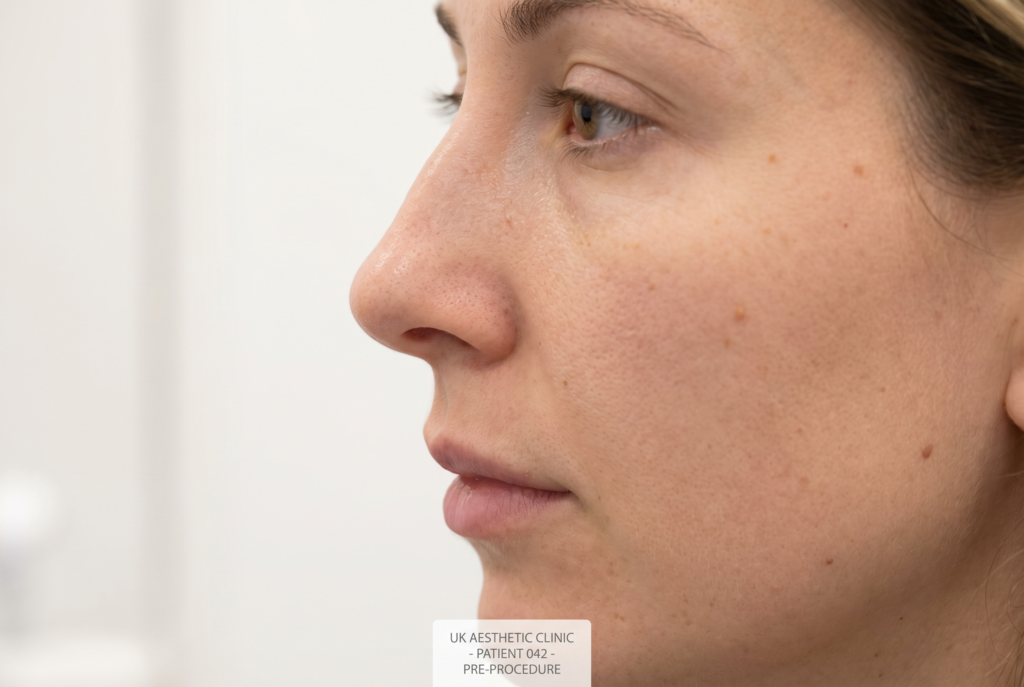
- A visible dorsal hump along the nasal bridge
- A slightly drooping, bulbous tip, particularly noticeable when smiling
There were no functional concerns affecting breathing. The focus was aesthetic, though still highly personal.
As is often the case, the patient was not seeking a dramatic transformation. Their priorities were clear:
- A smoother, more balanced profile
- Subtle refinement rather than obvious change
- A result that would feel natural and in keeping with their features
This reflects a broader shift in modern rhinoplasty, a preference for enhancement that supports existing facial harmony rather than altering it.
What Made This Case Distinct
Cases of this nature require attention not only to structural form, but also to dynamic movement.
While the dorsal hump influenced the profile at rest, the nasal tip position changed during facial expression. Managing both elements in combination requires a considered and balanced approach.
The objective was not simply to reshape the nose, but to ensure it appeared natural both at rest and in motion, a detail that often distinguishes a good result from an excellent one.
The Consultation Process: Establishing a Realistic Plan
A successful outcome begins with a thorough and transparent consultation.
Assessment in this case included:
- Overall facial proportions
- Skin thickness and cartilage quality
- Nasal behaviour during expression
- The patient’s expectations and motivations
The guiding principle was clear: refine the nose while preserving identity.
Equally important was ensuring the patient understood the scope of change, the limitations, and the recovery process, allowing for a well-informed and confident decision.
For those seeking rhinoplasty in London, a thorough consultation like this is essential to ensure the surgical plan aligns with both your anatomy and your personal goals.
The guiding principle was clear: refine the nose while preserving identity.

Surgical Approach: Precision with Restraint
The procedure was intentionally conservative.
Each step focused on improving proportion and balance without creating an artificial or “operated” appearance. The approach included:
- Smoothing the nasal bridge to soften the profile
- Refining and gently supporting the nasal tip
- Preserving structural integrity for long-term stability
Care was taken to avoid overcorrection. In rhinoplasty, restraint is often what allows results to remain natural over time.
In similar cases, managing tip behaviour during smiling can be as important as addressing the bridge itself , particularly when aiming for a harmonious overall result.
Why Subtle Refinements Often Work Best
It is a common assumption that more extensive changes lead to better outcomes.
In practice, carefully judged refinements tend to:
- Integrate more naturally with surrounding features
- Age in a more predictable and stable way
- Avoid drawing attention to the surgery itself
This case demonstrates how small, precise adjustments can produce a meaningful improvement without appearing obvious.
The Result: Balanced and Unobtrusive
The outcome was understated, yet effective.
Key improvements included:
- A smoother, more even nasal bridge
- A refined tip that moves naturally with expression
- Improved overall facial balance
Importantly, the result does not appear surgical. The nose sits more comfortably within the face, often the defining characteristic of a well-executed rhinoplasty.
Recovery: What Patients Can Expect
Recovery followed a typical progression:
- First week: Mild swelling and bruising
- 2–3 weeks: Early visible improvement
- 1–3 months: Continued refinement of shape
- 6–12 months: Final result settles
Discomfort was minimal, and the patient returned to normal daily activities within a relatively short period.
As with all rhinoplasty procedures, patience is important. The final outcome develops gradually as swelling resolves.
For a detailed overview of the procedure and recovery process, you can explore this here:
https://nizarhamadeh.com/rhinoplasty-center/
The Real Outcome: Confidence and Comfort
While the physical changes were modest, the psychological impact was more significant.
The patient reported:
- Greater ease in social situations
- Increased confidence in photographs
- Less day-to-day focus on their appearance
This reflects the broader purpose of rhinoplasty , not perfection, but the quiet removal of a persistent source of self-consciousness.

Is This Approach Suitable for You?
This type of outcome is typically suited to individuals who:
- Prefer refinement over transformation
- Value natural, understated results
- Want subtle improvements that enhance facial balance
Every case is different, and suitability depends on individual anatomy and goals. A personalised consultation remains the most reliable way to determine the right approach.
For patients considering further refinement after a previous procedure, additional options are available:
https://nizarhamadeh.com/rhinoplasty-center/revision-rhinoplasty/
What This Case Demonstrates
This case highlights several important principles:
- Small changes can create meaningful improvements
- Natural results require precision and restraint
- Treatment should always be individualised
- Facial balance is more important than dramatic alteration
Well-executed rhinoplasty should not draw attention — it should simply feel right for the face.
Final Thought
The most successful rhinoplasty outcomes are rarely the most noticeable.
They are the ones that bring balance, reduce self-consciousness, and allow you to feel comfortable without giving your appearance a second thought.
That is where confidence tends to follow naturally.
FAQs
How realistic are results like this?
Outcomes of this nature are achievable when the goal is refinement rather than transformation. Subtle adjustments tend to produce the most natural-looking results.
Will my result look natural?
When carefully planned, rhinoplasty should not appear obvious. The intention is to improve harmony, not create a noticeably different nose.
How long does it take to see final results?
Early changes are visible within a few weeks, with continued refinement over several months. Final results typically settle between 6 and 12 months.
Is recovery difficult?
Most patients experience mild swelling and discomfort in the first week. Recovery is generally well tolerated, with steady improvement over time.
Can small changes really make a difference?
Yes. Even minor adjustments can significantly improve overall facial balance.
What if I’ve already had rhinoplasty?
Further refinement is possible in selected cases. Revision rhinoplasty can address residual concerns while maintaining structural integrity.