
Introduction
If you are considering altering the shape of your nose, two approaches are commonly discussed: surgical rhinoplasty and non-surgical nose fillers.
Although both aim to improve appearance, they differ significantly in how they work, the results they achieve, and how long those results last.
Understanding these differences is essential before making a decision.
The Key Difference
Rhinoplasty is a surgical procedure that reshapes the underlying bone and cartilage of the nose, allowing for precise structural change.
By contrast, nose fillers use hyaluronic acid to add volume beneath the skin. While this can improve contour, it does not alter the underlying anatomy.
This distinction influences outcome, longevity, and long-term planning.
What Rhinoplasty Can Achieve
Rhinoplasty is designed for patients seeking structural refinement.
It may be used to:
- Reduce the overall size of the nose
- Remove a dorsal hump
- Refine or reshape the nasal tip
- Improve facial balance
- Address functional concerns such as breathing difficulties
If you are searching for a nose job in London, it is essential to choose a surgeon who specializes in both aesthetic and functional outcomes. In appropriate cases, both aesthetic and functional improvements can be achieved within a single procedure.
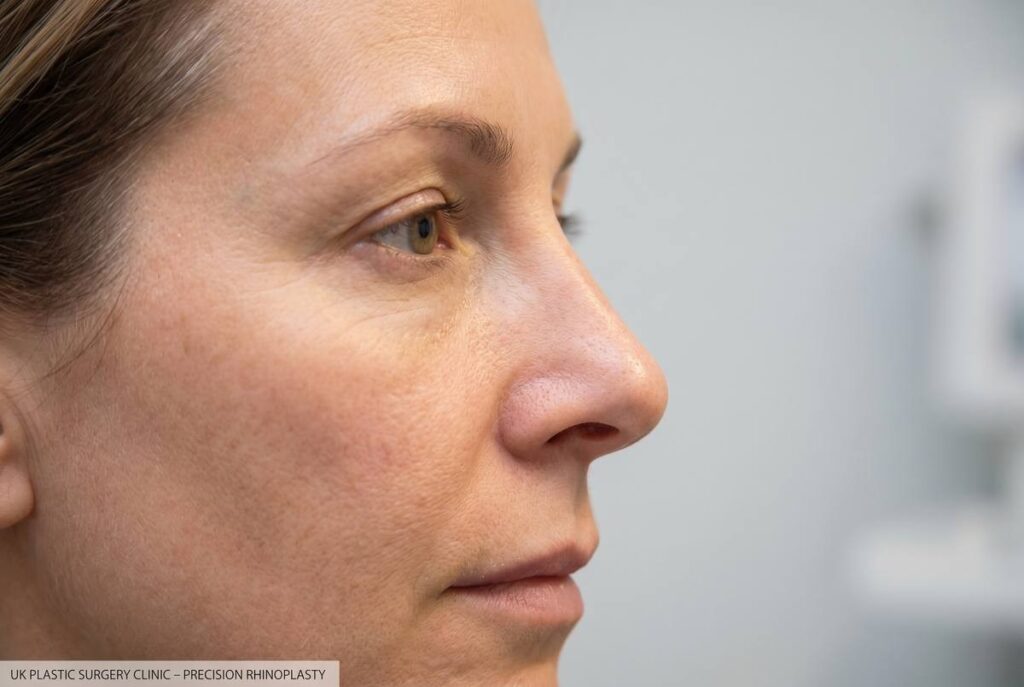
What Nose Fillers Can Achieve
Non-surgical fillers are best suited to subtle adjustments rather than structural change.
They may help to:
- Smooth minor irregularities
- Improve visual symmetry
- Create the appearance of a straighter profile
- Provide slight lift to the nasal tip
However, fillers cannot make the nose smaller or correct internal structural issues.
Results are temporary and typically last between 6 and 18 months.

Results: Structural Change vs Visual Refinement
Rhinoplasty provides permanent reshaping of the nose through surgical modification.
Fillers create a visual improvement by adjusting contour and light reflection, without altering structure.
For long-term correction, surgery is usually the more definitive option. For subtle or temporary changes, fillers may be appropriate.
Recovery and Downtime
Rhinoplasty:
- 1–2 weeks initial downtime
- Swelling settles gradually over several months
- Final results develop over time
Fillers:
- Minimal downtime
- Mild swelling or redness may occur
- Results visible immediately

Safety and Clinical Considerations
Both treatments are safe when performed by appropriately qualified practitioners.
Rhinoplasty risks may include:
- Swelling and bruising
- Temporary breathing changes
- Possibility of revision surgery
Filler-related risks may include:
- Temporary swelling or asymmetry
- Rare vascular complications
A thorough consultation is essential to determine suitability.
Cost: Short-Term vs Long-Term Perspective
Fillers generally involve a lower upfront cost but require ongoing maintenance.
Rhinoplasty involves a higher initial investment but offers a permanent result.
Over time, repeated filler treatments may exceed the cost of surgery.
Which Option Is Right for You?
Rhinoplasty may be suitable if you:
- Want a permanent result
- Require structural change
- Have functional concerns
Fillers may be suitable if you:
- Prefer a non-surgical approach
- Want subtle refinement
- Wish to explore potential changes
A Common Patient Journey
Some patients begin with fillers before progressing to surgery.
This can help them understand how changes to the nasal profile affect overall facial balance before committing to a permanent procedure.
Considering Further Refinement
If you are dissatisfied with previous results, revision rhinoplasty may be considered.
This is typically more complex and requires specialist expertise.
FAQs
Are nose fillers safer than rhinoplasty?
Both are safe when performed by qualified professionals, but risks differ.
Can fillers reduce the size of my nose?
No. Only surgery can reduce size.
How long do fillers last?
Typically 6–18 months.
Is rhinoplasty permanent?
Yes, results are long-lasting.
Can fillers be reversed?
Most hyaluronic acid fillers can be dissolved if required.
Will I need time off work after rhinoplasty?
Most patients take 1–2 weeks off.